

(Part 1 of a 3-part series)
If we are worried that hacked (or unintentionally misconfigured) voting systems might incorrectly count the ballots, there are three parts to the voting system that we should worry about:
- The voting machines, such as optical scanners that tabulate the ballots. Upon the close of the polls, they write the totals for each candidate onto a removable media (such as a USB drive) and also print them onto a “poll tape” (like a cash register tape).
- Transport of the results to the jurisdiction’s central office, where the removable media are uploaded into a desktop computer, the “election management system” (EMS). (Or: polling-place voting machines communicate to the EMS over the internet, which has its own dangers!)
- The central Election Management computer that adds up all the individual precinct results (aggregation).
If the voting machines are hacked, or misconfigured, then the results they write onto the thumbdrives and the poll tapes could be wrong. If the thumbdrives are tampered with on the way to the central office, then the results could be wrong. And if the EMS computer is hacked, or if election workers make mistakes uploading the result, then the overall election results could be wrong.
The poll tapes are quite useful here. They protect against errors (or hacking) in steps 2 and 3. That is, the votes printed in human-readable form on those pieces of paper are a kind of “primary document” that can’t be tampered with by computer hacking. Here’s an example of a poll tape; at the bottom you can see there’s a space for the pollworkers to sign it, right there in the polling place after the voting machine prints it out; and in some jurisdictions the pollwatchers (representatives of the political parties or candidates) sign it as well.

From the poll tapes, you can add up all the precinct results yourself, or you can compare the poll-tape numbers with the precinct-by-precinct numbers published by the election administrator.
In most states, the law already says that the poll tapes must be shown to witnesses in the polling place at the close of the polls, including: poll workers, credentialed poll watchers, and ordinary members of the public. In most states, the law already says that these poll tapes must be preserved as part of the election records. Examination of these poll tapes can be a valuable audit of steps 2 and 3 of the process above.
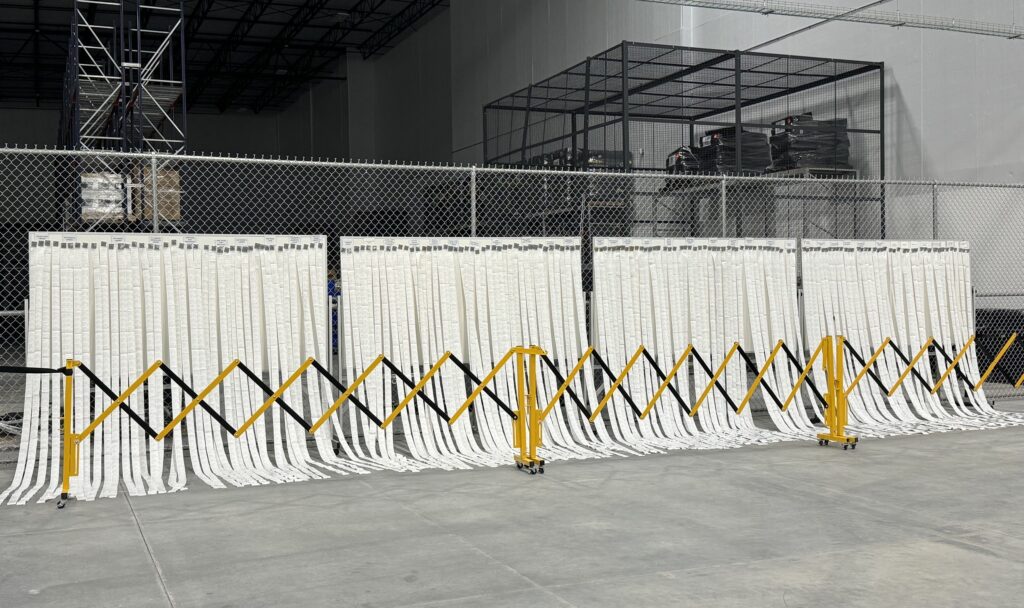
It’s worth being able to audit steps 2 and 3 (transport, uploading, and aggregation) even if poll tapes don’t offer protection against hacking inside the voting machine itself. That’s because steps 2 and 3 tend to be even more insecure and error-prone than step 1, counting the votes in each individual voting machine.
For well over 100 years, from before 1900 to into the 21st century, political parties sent volunteers to witness the in-the-precinct results at the close of the polls on election night. They did that just in case there were slip-ups (to put it politely) in the transmission and aggregation of the precinct results into district-wide election results. Before there were computerized voting machines, there were mechanical voting machines that displayed the totals on little odometers that were uncovered at the end of election day, that you had to copy down by hand—those were witnessed too. And before the mechanical machines, people counted paper ballots by hand, in the precinct, and announced the per-precinct totals to witnesses in the polling place.
In-the-precinct results witnessing sometimes makes a real difference.
- In one of Rush Holt’s early elections to the U.S. Congress, the County Clerk’s election night report had his opponent winning; but his volunteers had been in almost every precinct copying down the numbers from the voting machines, and he was able to inform the media that the Clerk’s report was erroneous. One precinct’s results had been incorrectly transcribed, by an amount more than the margin of victory in that election. A recanvass (reexamination of the numbers on every voting machine) confirmed that he was right.
- In Shelby County, TN, 2015, a photo of a posted tape showing 546 votes didn’t match the county’s 330 for that precinct. Investigating it uncovered 1,001 dropped votes.
- In Venezuela’s 2024 presidential election, President Nicolas Maduro claimed that he won with 51.2% of the vote, but opposition party volunteers collected copies of poll tapes from 80% of the polling places, proving that Edmundo Gonzalez won 67% of the vote.
Unfortunately, in many places, the local political party organizations have let this practice lapse. Some counties are so heavily “red” or “blue” that there aren’t enough volunteers of the minority party to cover all the polling places. Vote centers make things more complicated, so it’s harder to understand what it is you’re witnessing. But it’s still as important as ever to citizen-audit the collection and aggregation of the per-precinct vote numbers.
So therefore: Publish the poll tapes. Treat them as a public record (as most jurisdictions already do). Display scans of the signed poll tapes on the election-results web site, as some counties do already. Make sure election administrators follow their existing state laws requiring them to show the local in-the-precinct results to members of the public, immediately upon the close of the polls. And provide a copy of the poll tapes to anyone who wants to audit steps 2 and 3 of the process. If the political party organizations aren’t doing the audit, then nonpartisan organizations like America Counts, Scrutineers, or Smart Elections can send volunteers to do the job. (You can visit those web sites for information about volunteering! Or volunteer with your county political party organization.)
But what about vote centers? When one precinct’s results include the votes cast in that precinct’s polling place on election day, plus votes cast in early voting for that precinct but in a vote center elsewhere, how do you make sense of the poll tapes? It’s not obvious! I’ll explain that in parts 2 and 3 of this series on poll tapes.
Leave a Reply